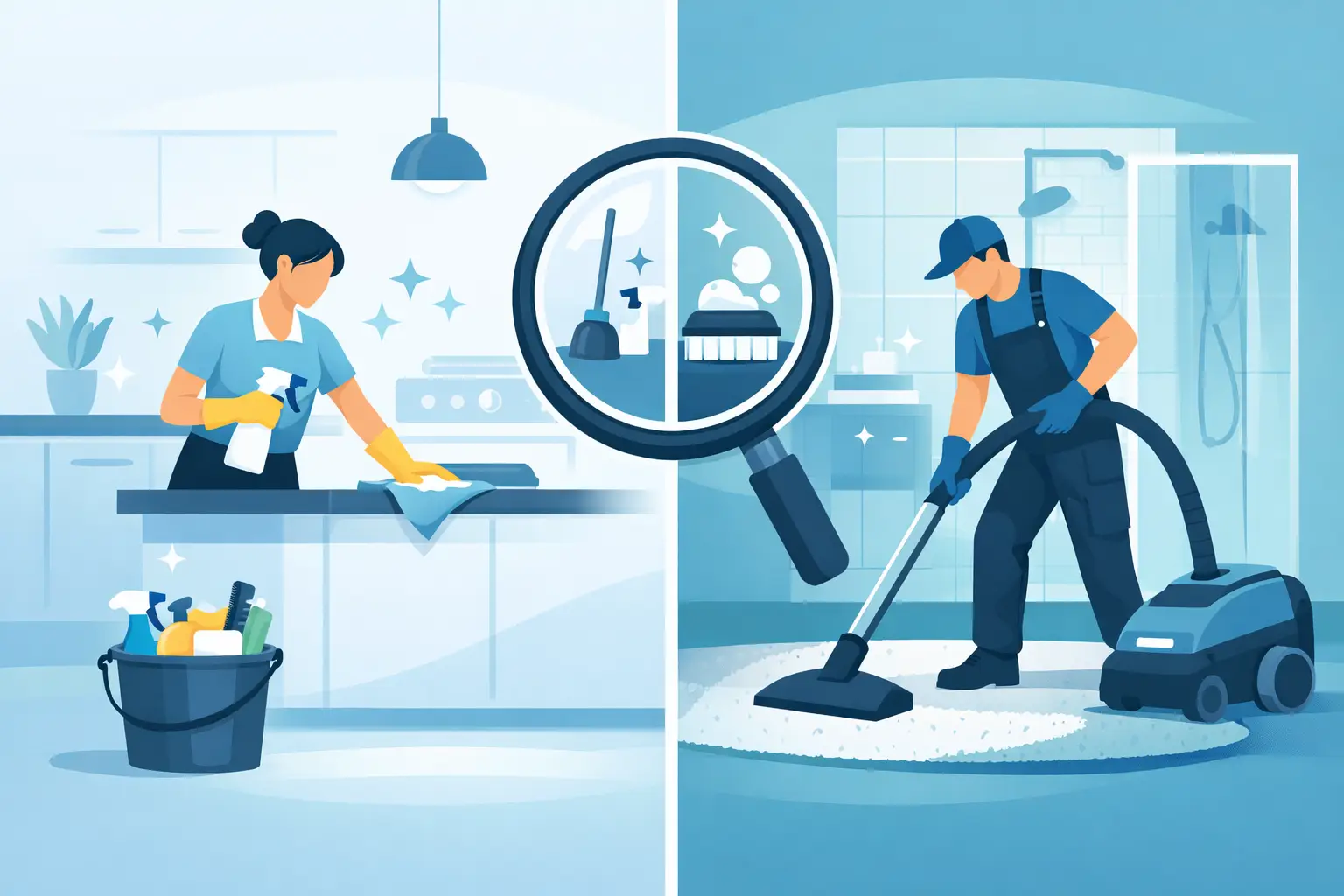
A renovated kitchen can look finished while still hiding fine drywall dust in cabinet tracks, grout haze on tile, and adhesive residue on new fixtures. That is why post renovation versus standard cleaning is not simply a question of how much cleaning you need. It is a question of the type of mess left behind, the condition of the space, and what it takes to make your home comfortable and safe to use again.
For South Florida homeowners, renters, property managers, and contractors, choosing the right service prevents a frustrating outcome: a beautiful new room that still feels gritty, smells dusty, or requires hours of follow-up work. Standard cleaning maintains a lived-in home. Post-renovation cleaning addresses the residue and detail work that construction crews are not always contracted to complete.
What Standard Cleaning Is Designed to Handle
Standard cleaning is the reliable reset that keeps a home orderly between deeper services. It is ideal for households that need recurring help, are preparing for guests, or want a one-time refresh after a busy season. The focus is on normal daily buildup: fingerprints, crumbs, bathroom residue, pet hair, dust on accessible surfaces, and floors that need attention.
A typical standard service includes cleaning and sanitizing bathrooms, wiping kitchen counters and exterior appliance surfaces, dusting reachable furniture, making beds when requested, removing trash, vacuuming, and mopping. The exact scope should always be clear before service, especially if you need extras such as inside cabinets, inside the oven or refrigerator, interior windows, patios, or detailed baseboard cleaning.
This service works best when the home is already functional. Furniture is in place, rooms are free of construction materials, and surfaces do not have thick dust or renovation debris. It can make a home feel noticeably fresher, but it is not intended to remove cement dust from window sills or paint splatter from newly installed flooring.
Post Renovation Versus Standard Cleaning: The Real Difference
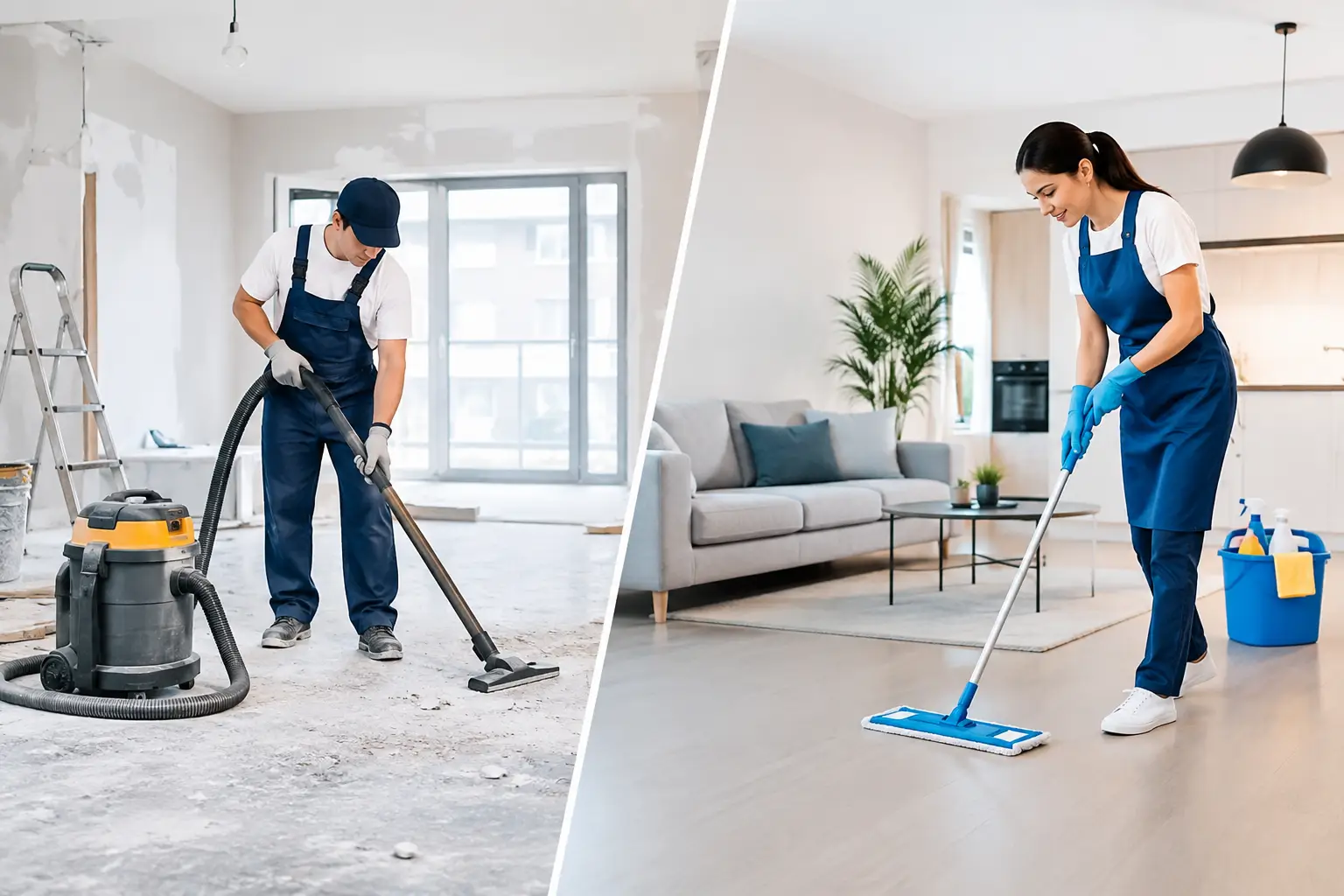
The biggest difference is the soil level and the level of detail required. Standard cleaning deals with household mess. Post-renovation cleaning deals with construction residue, often in places that look clean at first glance.
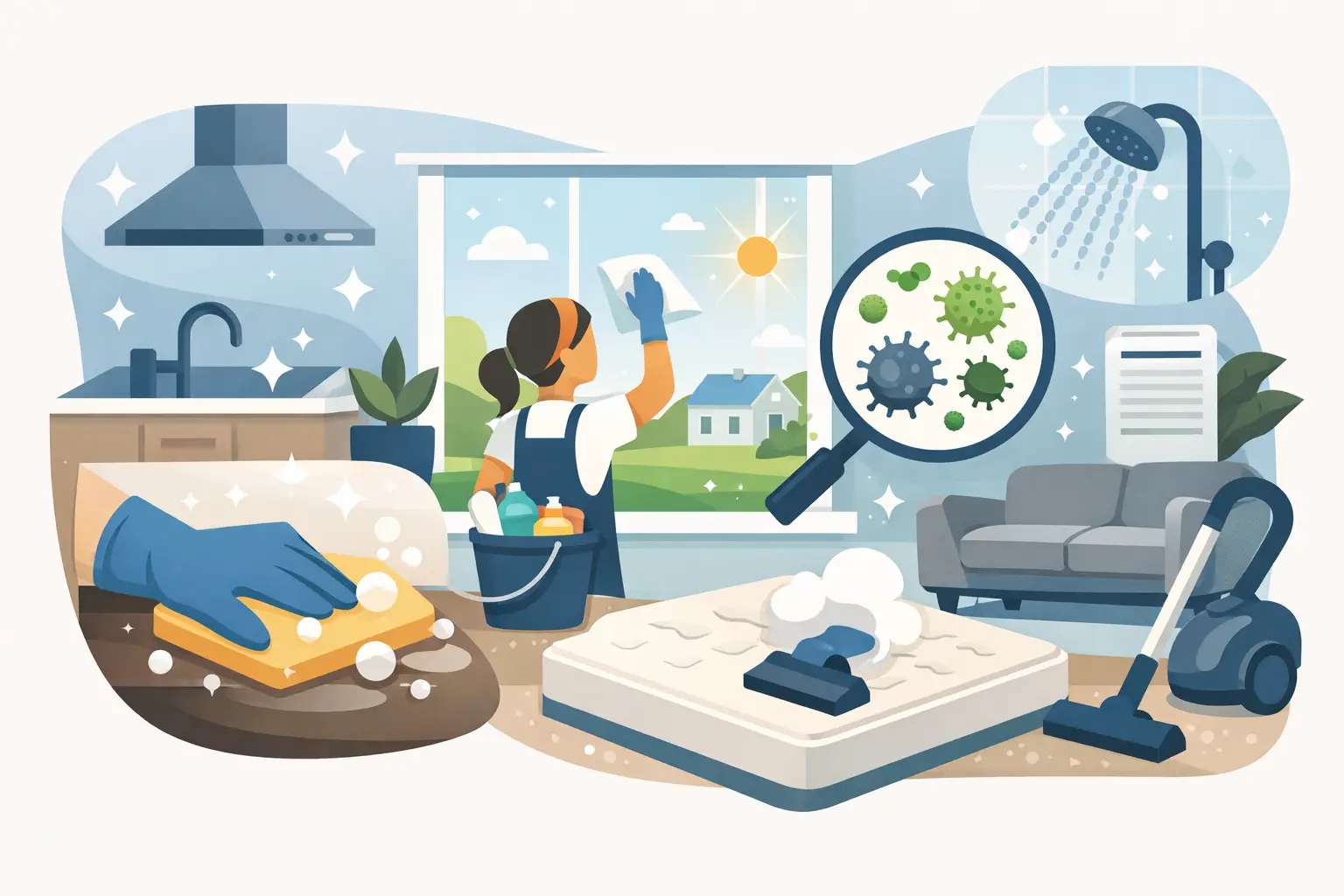
Even a small bathroom remodel can leave behind dust that travels well beyond the work area. Fine particles settle on ceiling fans, inside drawers, along baseboards, in air vents, behind appliances, and on upholstery. Sawdust, drywall compound, grout haze, silicone residue, stickers, protective film, and paint drips each require a careful approach. Using the wrong tool or product can scratch a new glass cooktop, dull a stone surface, or damage freshly finished cabinetry.
Post-renovation cleaning is therefore more labor-intensive and more methodical. A professional team usually works from high surfaces down to floors so settled dust is not redistributed. It may involve repeated vacuuming with appropriate filtration, detailed wiping of trim and fixtures, cleaning inside newly installed cabinets and drawers, and carefully removing residue from protected surfaces.
A thorough post-renovation service commonly addresses these areas:
- Fine dust on walls, ledges, vents, fans, trim, doors, and light fixtures
- Interior cabinet and drawer cleaning after installation work
- Residue on windows, tracks, glass, tile, fixtures, and hardware
- Detailed floor care, including vacuuming edges and removing loose debris
- Final touch-ups that make the renovated space ready for furniture, tenants, guests, or everyday use
Not every renovation needs the same scope. A finished paint project in one bedroom is very different from a full kitchen renovation or an entire-home remodel. The size of the project, type of materials used, whether contractors protected adjacent rooms, and how long the property sat after work all affect the cleaning plan.
Why Construction Dust Needs More Than a Quick Wipe-Down
Construction dust is persistent because it is extremely fine. A dry cloth may push it into the air, only for it to settle again hours later. A regular vacuum without proper filtration may also release particles back into the room. This is why a post-renovation clean often requires more than one pass on horizontal surfaces and floors.
Dust is not the only concern. Newly renovated spaces often have fragile finishes that need time and care. Fresh paint can be marked by aggressive scrubbing. Natural stone, polished metal, glass, stainless steel, and luxury vinyl flooring each respond differently to products and tools. A professional cleaner should assess the finish before treating spots, rather than assuming one cleaner is safe for every surface.
For families with children or pets, removing fine dust is also a practical comfort issue. Floors and low surfaces are where little hands, paws, toys, and food often end up. Eco-friendly, pet-safe products can be part of the plan, but product choice alone is not enough. The cleaning method, equipment, and attention to detail matter just as much.
When a Standard Clean May Be Enough
A standard cleaning may be the right choice if the work was minor, contained, and fully cleaned by the contractor. For example, replacing a faucet, hanging shelving, repainting one wall, or installing a small fixture may leave only light dust and routine cleanup needs.
It can also work well after a post-renovation clean has already been completed. Once the home is truly free of debris and construction residue, recurring standard cleaning helps keep the space looking as polished as it did on day one. Many busy homeowners choose this approach: a detailed reset after the project, followed by weekly, biweekly, or monthly maintenance that fits their schedule.
The key is being honest about what remains. If you can run your hand along a shelf and see white powder, notice grit underfoot, or find dust inside closed cabinets, the home likely needs a post-renovation scope rather than routine maintenance.
How to Choose the Right Cleaning Scope
Start by looking at the property as it will be used next. If you are moving back into your home after a remodel, you may want detailed cleaning inside cabinets, drawers, closets, appliances, and windows before unpacking. If you are preparing a rental, Airbnb, office, or retail space for occupancy, the priority may be a polished presentation with clean floors, fixtures, glass, and high-touch areas.
It also helps to ask whether contractors have removed their materials and completed their own rough cleanup. Professional cleaners can handle the final cleaning stage, but large debris, hazardous materials, exposed wiring, active work zones, and heavy construction waste should be addressed before the cleaning appointment. A space should be safe to enter and ready for detailed work.
Photos and a clear description of the project make quoting more accurate. Mention the number of rooms affected, flooring type, interior windows, cabinet interiors, appliances, and any residue you can see. A tailored scope avoids surprise expectations and ensures enough time is reserved for the job.
Timing Your Post-Renovation Cleaning in South Florida
Schedule the final cleaning after all major work is complete, including painting, flooring, cabinetry, countertop installation, and final punch-list repairs. Cleaning too early often means dust will settle again after the next contractor visit. If possible, allow the renovation team to remove tools, packaging, and larger debris first.
In humid South Florida weather, dust can mix with moisture and cling to surfaces, particularly near open doors and windows. This makes prompt final cleaning helpful once the project is complete. It is especially valuable before a move-in, a property showing, or the arrival of seasonal guests.
For larger projects, a two-stage plan may make sense. The first service removes heavy dust and residue after construction. A lighter final touch-up can then be scheduled after furniture delivery, inspections, or the last contractor walkthrough. It depends on the project timeline, but this approach can protect the final presentation of the space.
A Cleaner Finish Starts With Clear Expectations
Whether you need a routine home refresh or a detailed post-construction service, the best result begins with a clearly defined checklist. Go Cleaning Maids helps clients match the cleaning scope to the condition of the home, with flexible service options, careful attention to surfaces, and the reassurance of licensed and insured local professionals.
A renovated room should feel exciting the moment you walk in, not like another item on your to-do list. Choose the level of cleaning that gives the space its true finishing touch, then make room to enjoy what you built.