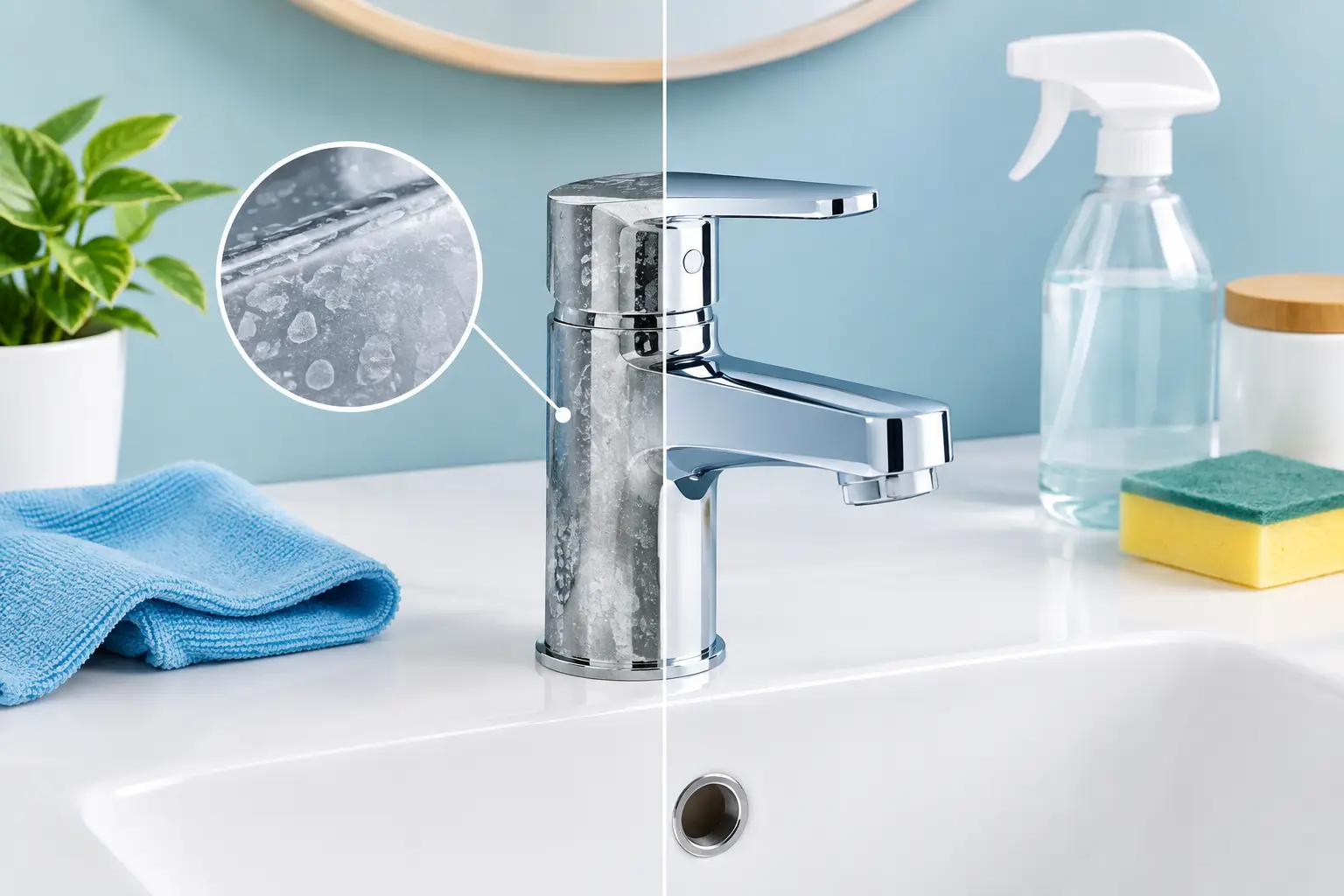
That cloudy ring around the faucet base, white crust on the showerhead, and dull film on the glass are not signs that your bathroom is unclean. They are mineral deposits left behind as water dries. Knowing how to remove hard water fixture stains without scratching a finish or damaging a special coating can bring back the clean, polished look you want from your kitchen or bath.
Hard water stains are especially frustrating because they return if moisture is allowed to sit. The right approach is not about using the harshest cleaner. It is about matching the method to the surface, allowing enough contact time, and maintaining the fixture between deeper cleanings.
Why hard water stains cling to fixtures
Hard water contains dissolved minerals, primarily calcium and magnesium. When water droplets evaporate, those minerals remain on the surface. Over time, they build into a chalky white scale, brownish residue, or a stubborn cloudy haze.
Faucets, shower doors, sink basins, toilet bowls, and showerheads are common trouble spots because they are exposed to repeated splashing and slow drying. In South Florida homes, bathroom humidity can make surfaces stay damp longer, which gives mineral residue and soap scum more opportunity to collect.
The appearance can vary by fixture. Chrome may develop white spots around handles and aerators. Brushed nickel can look streaky or dull. Glass shower doors often develop a hazy film that seems to resist ordinary bathroom spray. When soap scum mixes with mineral buildup, the stain becomes even harder to lift.
Before you remove hard water fixture stains, identify the finish
A cleaner that works beautifully on ceramic tile may be too aggressive for natural stone, unlacquered brass, polished metal, or a coated shower door. Check the fixture manufacturer’s care instructions when possible, especially for newer premium finishes such as matte black, champagne bronze, and brushed gold.
Start with the least aggressive option and test it in a small, hidden area. Avoid abrasive powders, steel wool, rough scouring pads, and razor blades on fixtures or glass. They can leave fine scratches that make future buildup cling more easily.
Never combine cleaning products. In particular, bleach should never be mixed with vinegar, ammonia, or acidic toilet cleaners. The combination can create dangerous fumes. Open a window or run the exhaust fan, wear gloves, and keep products away from children and pets while you clean.
A safe method for faucets and sink fixtures
For most chrome, stainless steel, and sealed metal fixtures, white vinegar diluted with an equal amount of water is an effective first step. Vinegar’s mild acidity helps dissolve mineral deposits without requiring heavy scrubbing.
Spray the solution onto a microfiber cloth rather than directly onto the fixture, then lay or wrap the damp cloth over the stained area for 10 to 15 minutes. This lets the solution work on the buildup. Wipe gently, rinse with clean water, and dry the fixture completely with a fresh microfiber cloth.
For a stubborn ring around the faucet base, use a soft toothbrush after the solution has had time to sit. Work carefully around seams and handles, where deposits tend to collect. A small amount of dish soap can help if greasy residue or soap scum is also present.
Do not leave vinegar sitting on fixtures for long periods, and do not use it on natural stone countertops, unsealed grout, or finishes the manufacturer says should not contact acid. For delicate finishes, warm water, a small amount of mild dish soap, and a microfiber cloth are the safer choice. It may take a few rounds, but preserving the finish is worth the extra time.
Cleaning a clogged or spotted showerhead
Mineral buildup inside a showerhead can affect spray patterns as well as appearance. If the showerhead can be removed, soak it in a bowl of equal parts warm water and white vinegar for 30 to 60 minutes. Rinse it well, use a soft toothbrush on the nozzles, and run water through it before reinstalling.
If it cannot be removed, fill a sturdy plastic bag with the diluted vinegar solution and secure it around the showerhead so the nozzles are submerged. Do not overtighten the bag against the pipe or leave it for hours. After soaking, remove the bag, brush gently, rinse, and dry.
How to clear cloudy shower doors without scratching them
Shower-door haze is often a mix of hard water minerals, body oils, and soap residue. Begin by rinsing the glass with warm water. Apply a vinegar-and-water solution or a cleaner labeled safe for glass shower doors, then let it sit for several minutes.
Use a non-scratch sponge or microfiber cloth in overlapping motions. Rinse thoroughly and use a squeegee to remove water from the entire door. Dry the edges, track, and hardware with a towel. Skipping the drying step is one reason spots return so quickly.
For heavy buildup, repeat the process rather than reaching immediately for a harsh abrasive. If the glass has a protective coating, follow its care guidance closely. Acidic cleaners, abrasive pads, and strong degreasers can reduce the life of some coatings.
The shower track deserves attention too. Use a soft brush and mild cleaner to loosen residue, then wipe it out with a damp cloth. A clean track improves the overall appearance of the shower and helps prevent grime from spreading back onto the glass.
Treating hard water stains in toilets and porcelain sinks
Porcelain is durable, but it still benefits from a measured approach. For a toilet bowl ring, choose a toilet cleaner formulated to remove mineral scale and follow the label directions. Allow the product to sit for the recommended time, then scrub with a toilet brush and flush.
A pumice stone made specifically for wet porcelain can help with severe mineral rings, but use it carefully. Keep both the stone and surface wet, apply very light pressure, and stop if you notice resistance or concern about the surface. This is not appropriate for every toilet finish, so when in doubt, use a professional cleaning product designed for the bowl.
For porcelain sinks, use a non-abrasive cleaner and a soft sponge. Rinse and dry afterward. If stains persist around drains or overflow openings, a soft toothbrush can reach the tight spaces without damaging the surface.
The habits that keep mineral stains from returning
Hard water stains are easier to prevent than to remove once they have hardened. The most effective maintenance step is simple: remove standing water before it dries. A quick wipe of the faucet and sink after use takes less than a minute and makes a meaningful difference.
In showers, use a squeegee after the last shower of the day, then leave the door or curtain open to improve airflow. Wipe the showerhead and handles weekly with a damp microfiber cloth. For kitchen faucets, dry the base and handle after washing dishes, particularly if water tends to pool near the fixture.
If your home has frequent mineral buildup despite regular care, a water treatment solution may be worth discussing with a qualified provider. The best option depends on the water source, household needs, and plumbing setup. Treatment can reduce scale, but it does not replace routine cleaning of soap residue and moisture-prone surfaces.
When a deeper cleaning is the better option
Sometimes the issue is not just a few water spots. Fixtures may have weeks of buildup, shower glass may be heavily clouded, or mineral deposits may be mixed with grime in areas that are difficult to reach. A detailed deep cleaning can reset those high-use spaces with careful attention to sinks, fixtures, shower doors, tubs, tile, and bathroom surfaces.
Go Cleaning Maids uses eco-friendly, pet-safe products whenever appropriate and tailors the service scope to the home. For busy households, move preparations, or a bathroom that needs more than a quick wipe-down, professional help can save time while protecting the surfaces you rely on every day.
A clean fixture does more than shine. It makes the whole room feel cared for, and a few consistent minutes of maintenance can help that freshly cleaned feeling last longer.