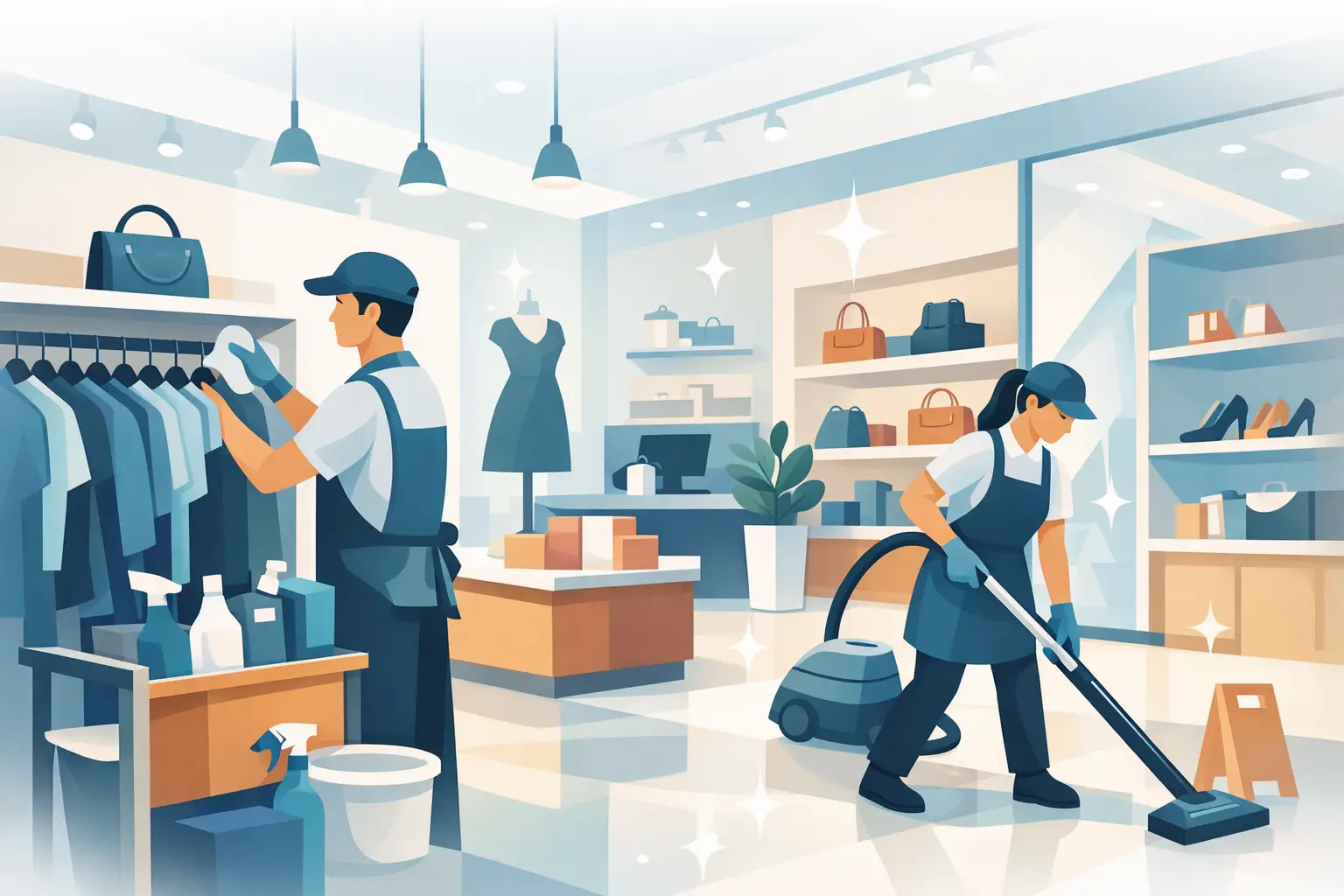
A customer may never comment on a clean retail floor, streak-free glass, or a fresh-smelling fitting room. They will notice the opposite immediately. Retail store cleaning is not simply a closing-task checklist. It is part of the experience customers use to decide whether your business feels organized, trustworthy, and worth returning to.
For South Florida retailers, cleaning also has to stand up to sand, rainwater, humidity, heavy foot traffic, and the constant fingerprints that come with busy stores. A thoughtful routine keeps small issues from becoming visible distractions during the hours when your team should be focused on customers.
Why retail store cleaning affects more than appearance
A clean store helps products look their best. Dust on shelving, smudges on display cases, debris around a checkout counter, or a neglected restroom can quietly lower the perceived value of everything you sell. That is true whether you operate a boutique in Boca Raton, a salon retail area in Deerfield Beach, or a high-traffic shop in Fort Lauderdale.
Cleanliness also affects how employees feel at work. Staff members can reasonably handle quick touch-ups during a shift, such as wiping a counter after a spill or straightening a display. They should not be expected to spend valuable selling time scrubbing floors, disinfecting restrooms, or reaching dusty vents after closing. Clear cleaning responsibilities protect both the customer experience and your team’s energy.
There is a practical health and safety component as well. Entryway moisture can create slip risks. Overflowing trash attracts pests and creates odors. High-touch surfaces collect residue throughout the day. Regular care reduces these avoidable problems before they become a complaint, a bad review, or an interruption to business.
A retail store cleaning plan built around traffic
The best schedule depends on your store’s layout, customer volume, merchandise, and operating hours. A small appointment-only showroom has different needs than a clothing store with fitting rooms or a shop near the beach where sand comes in every afternoon. Still, most retail spaces benefit from dividing work into daily, weekly, and periodic tasks.
During business hours: protect the customer-facing areas
Opening should begin with a quick visual reset. Floors should be clear, entry glass should be free of obvious fingerprints, counters should be wiped down, and restrooms should be stocked and presentable. This does not need to be a lengthy production, but it should be consistent enough that the first customer sees a store ready for business.
During the day, focus on what customers touch and what they can see from where they stand. Spot-clean spills quickly, empty trash before it becomes noticeable, and check fitting rooms, restrooms, and checkout areas at regular intervals. If a rainy afternoon brings in water and dirt, increase entryway checks rather than waiting for the end of the shift.
Avoid heavily fragranced products in sales areas. A strong scent can be unpleasant for customers with sensitivities and may compete with the natural scent of products, especially in apparel, beauty, and specialty food retail. Low-odor, eco-friendly products can help maintain a clean environment without making the store feel chemically treated.
After closing: clean beyond the obvious
Closing is the right time for more complete floor care, restroom cleaning, trash removal, and disinfection of high-touch points. Door handles, card terminals, counter edges, light switches, carts, baskets, and fitting-room benches are easy to overlook because they are used constantly. They also make a strong impression when they feel sticky, dusty, or visibly marked.
Floors deserve special attention because they carry the daily evidence of traffic. Vacuuming may be enough for carpeted areas on lighter days, while hard surfaces often need sweeping and mopping. The correct method depends on the material. Excess water can damage wood-look flooring and leave slick surfaces, while harsh chemicals can dull finishes. A professional cleaner should match products and techniques to the floor rather than treating every surface the same way.
Weekly and monthly: handle the details that build up
The details do not disappear just because they are outside the immediate customer line of sight. Dust gathers on shelving tops, baseboards, vents, window tracks, display fixtures, and behind checkout equipment. Restrooms need more than a quick wipe-down. Grout lines, dispensers, partitions, and floor edges need focused care to prevent buildup.
A deeper weekly or monthly service may include:
- Detailed cleaning of display shelving, fixtures, counters, and ledges
- Interior glass cleaning for doors, mirrors, and display cases
- Restroom sanitizing, including partitions, dispensers, and hard-to-reach edges
- Floor-detailing for corners, baseboards, and areas beneath movable furniture
- Dust removal from vents, frames, blinds, and other elevated surfaces
For stores with inventory displays or sensitive merchandise, cleaning should be coordinated carefully. A cleaner can work around displays, but fragile items, open food products, electronics, or high-value merchandise may need to be moved or protected by store staff first. That small bit of preparation reduces risk and keeps the service moving efficiently.
What should stay with staff and what to outsource
Retail teams are closest to the sales floor, so they are well positioned for immediate tasks: clearing a spill, returning abandoned items, replacing restroom supplies, and keeping the checkout area neat. Those small actions are part of daily store operations.
A professional cleaning team is often a better fit for the labor-intensive work that requires time, equipment, or a more detailed process. Think floor mopping after close, restroom sanitation, dusting high surfaces, interior windows, deep cleaning fixtures, breakroom care, and periodic detail work. Outsourcing is particularly useful when your staff is already stretched thin, when traffic is heavy, or when the store needs to look consistently polished across several locations.
It depends on your schedule and budget. A low-traffic store may only need recurring professional cleaning once or twice a week with staff handling daily touch-ups. A busy retail environment may need nightly service, plus additional attention after promotions, holiday weekends, construction work, or seasonal events. The right scope should be based on actual conditions, not a one-size-fits-all package.
Ask the right questions before hiring a cleaning company
Reliability matters as much as a cleaning checklist. Retail businesses need a provider that can work within access procedures, alarm requirements, closing times, and merchandising needs. Before booking service, confirm whether the company is licensed and insured, what is included in the quoted scope, and how concerns are handled if something is missed.
It is also wise to ask about cleaning products. Pet-safe and eco-friendly options can be a good choice for stores that welcome animals, sell children’s products, or want to limit harsh residues. Yet eco-friendly should not mean vague. Ask how high-touch surfaces, restroom areas, and floors will be cleaned, and whether the products are appropriate for your materials.
Transparent scope prevents disappointment. “Clean the store” can mean very different things to different people. A dependable proposal should clarify the frequency of service, restroom tasks, floor care, trash removal, glass cleaning, breakroom areas, and available add-ons such as interior windows or detailed cabinet and fixture cleaning.
When a deeper clean is worth scheduling
Routine service keeps a store presentable, but certain moments call for a more complete reset. Consider a deep clean after a renovation, before a grand opening, following a major sale event, or when dust and residue have reached the places daily cleaning misses. It is also useful before professional photography, an inspection, a landlord walkthrough, or a busy holiday season.
Go Cleaning Maids can tailor commercial cleaning around your store’s hours and priorities, with insured service, detailed add-on options, and a satisfaction-focused approach. For retailers, that means building a plan around the areas customers notice most instead of paying for a generic checklist that does not fit the space.
A well-kept store tells customers that care extends beyond the transaction. Set a cleaning rhythm your staff can maintain, bring in professional help for the work that demands more time and detail, and let your space support the quality of what you sell every day.