When someone has been sick, the urge to sanitize home after illness can feel immediate – especially when the rest of the household is ready to get back to normal. A thoughtful reset can reduce what is left behind on frequently touched surfaces, refresh the rooms where recovery happened, and make home feel comfortable again. The goal is not to treat every inch of the house like a hospital. It is to clean strategically, safely, and thoroughly enough to restore peace of mind.
For most homes, the best approach is simple: remove dirt first, then use an appropriate disinfecting product where it matters most. That distinction makes a real difference. Disinfectants work best on a surface that has already been cleaned, and using more product than necessary can leave behind residue or create unnecessary fumes.
Start When Symptoms Are Improving
If possible, wait until the sick person is feeling better and able to spend time in another area while you clean their primary spaces. Open windows or run ventilation where practical, particularly in bathrooms, bedrooms, and smaller enclosed rooms. In South Florida, humidity can make a closed-up home feel stale quickly, so fresh airflow is a helpful first step.
Put on gloves if you are cleaning up bodily fluids or handling heavily soiled laundry. Then gather what you need before moving from room to room. A basic post-illness cleaning kit may include:
- Disposable gloves
- Microfiber cloths or disposable paper towels
- General-purpose cleaner
- An EPA-registered disinfectant suitable for your surfaces
- Laundry detergent
- A lined trash bag
Read the label on every disinfectant before using it. Contact time matters: many products must remain visibly wet for a specified number of minutes to do their job. Never mix cleaning chemicals, particularly bleach with ammonia, vinegar, or products containing other acids. More chemicals do not mean a cleaner home – they can create harmful fumes.
Clean First, Then Disinfect Key Touchpoints
Cleaning removes grime, oils, crumbs, and germs from surfaces. Disinfecting is the next step when you need to kill many remaining germs on hard, nonporous surfaces. You may not need to disinfect every table, wall, or decorative item in the home. Focus your energy on the places hands touch repeatedly.
Prioritize the Highest-Touch Surfaces
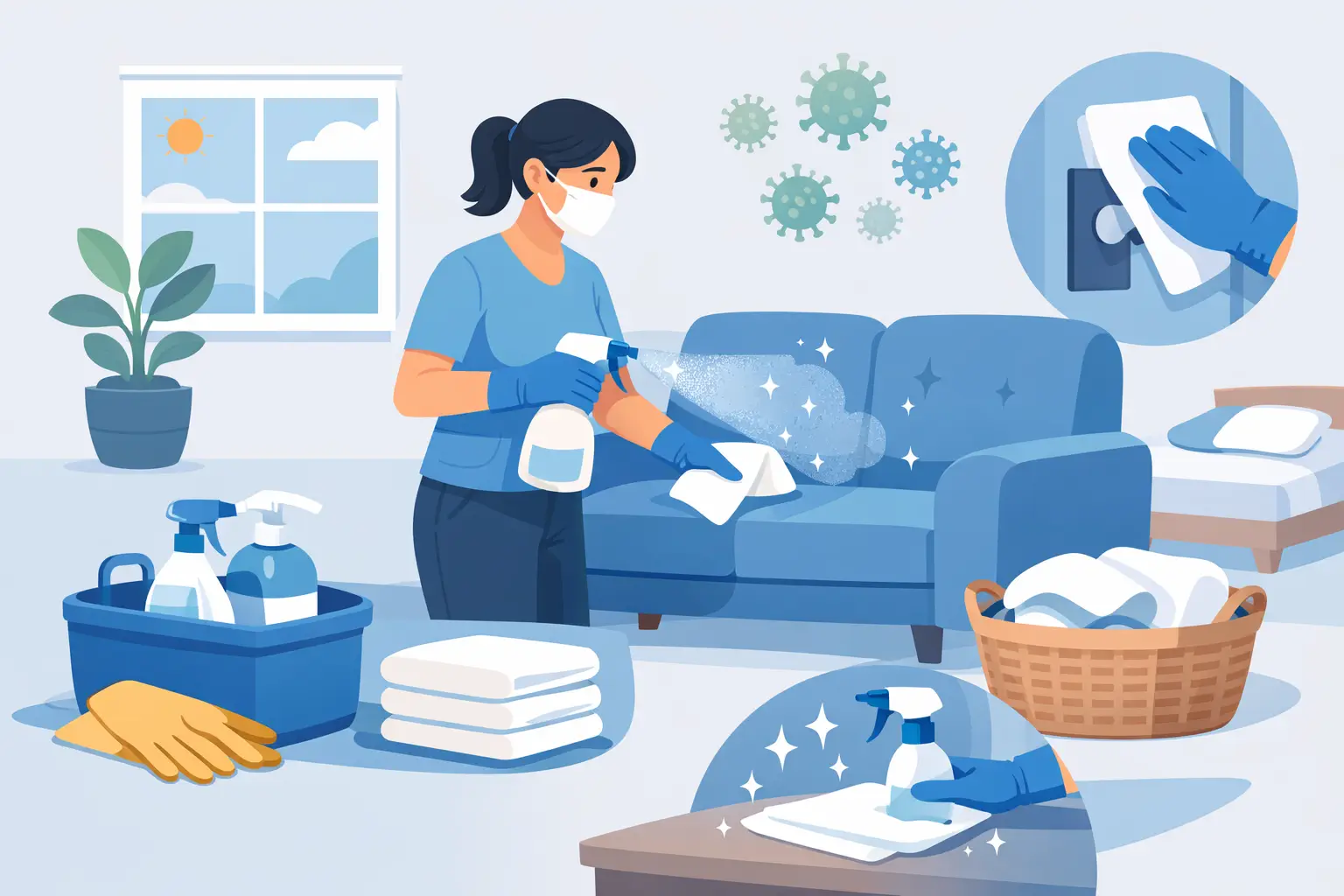
Start in the bedroom, bathroom, and common areas used during the illness. Wipe down doorknobs, light switches, cabinet pulls, faucet handles, toilet flush levers, remotes, bedside tables, phones, and frequently used countertops. Pay attention to refrigerator handles, microwave buttons, coffee makers, keyboards, and car keys if the sick person used them regularly.
For electronics, avoid spraying liquid directly onto the device. Use a lightly dampened cloth or a product specifically approved for electronics, following the manufacturer’s directions. A soaked remote control or keyboard creates a different problem than the one you are trying to solve.
In a busy household, it also helps to think about the shared path through the home. The bathroom switch, kitchen sink handle, stair rail, and front-door handle often deserve more attention than a rarely used guest room.
Know When Soap and Water Are Enough
Many items should be cleaned rather than heavily disinfected. Upholstered furniture, rugs, curtains, and delicate finishes can be damaged by strong chemicals. Vacuum soft furnishings, wash removable covers according to their care labels, and spot-clean as needed.
For dishes and drinking glasses, normal washing with hot water and dish soap or a dishwasher cycle is generally appropriate. There is no need to discard household items simply because someone used them while sick. Consistent cleaning and proper laundering are usually far more practical.
Reset the Bathroom Carefully
Bathrooms deserve special attention after stomach bugs, respiratory illnesses, or any illness involving frequent coughing, sneezing, or vomiting. Begin with the sink, faucet, vanity, toilet, and shower controls. Clean visible soil first, then disinfect hard surfaces according to product directions.
Replace or wash hand towels, bath towels, and washcloths. Empty the trash, especially if it contains used tissues, and wipe the trash can lid and rim before putting in a fresh liner. If toothbrushes were stored very close together, give the holder a thorough wash and consider replacing any toothbrush that looks worn or cannot be cleaned easily.
Do not overlook the floor near the toilet and sink. It may not look dirty, but it receives plenty of traffic during a sick day. A careful mop with a cleaner suitable for your flooring is usually enough. If a bodily fluid spill occurred, follow your disinfectant label’s instructions for cleanup and disposal.
Wash Laundry Without Shaking It Out
Bedding, pajamas, towels, and clothing used during an illness should be washed promptly, but avoid shaking them out before they go into the machine. That can send particles into the air and onto nearby surfaces.
Wash items using the warmest water setting allowed by the fabric care label and dry them completely. Use ordinary laundry detergent unless the label on a specific item calls for something different. If a hamper has held soiled laundry for several days, wipe down the lid, handles, and interior hard surfaces once it is empty.
Pillows, comforters, and mattress protectors are easy to forget. Wash what is washable, following care labels, and vacuum the mattress surface after stripping the bed. A clean set of sheets can make recovery feel like a fresh start, even before the entire house is finished.
Give the Kitchen a Fresh Start
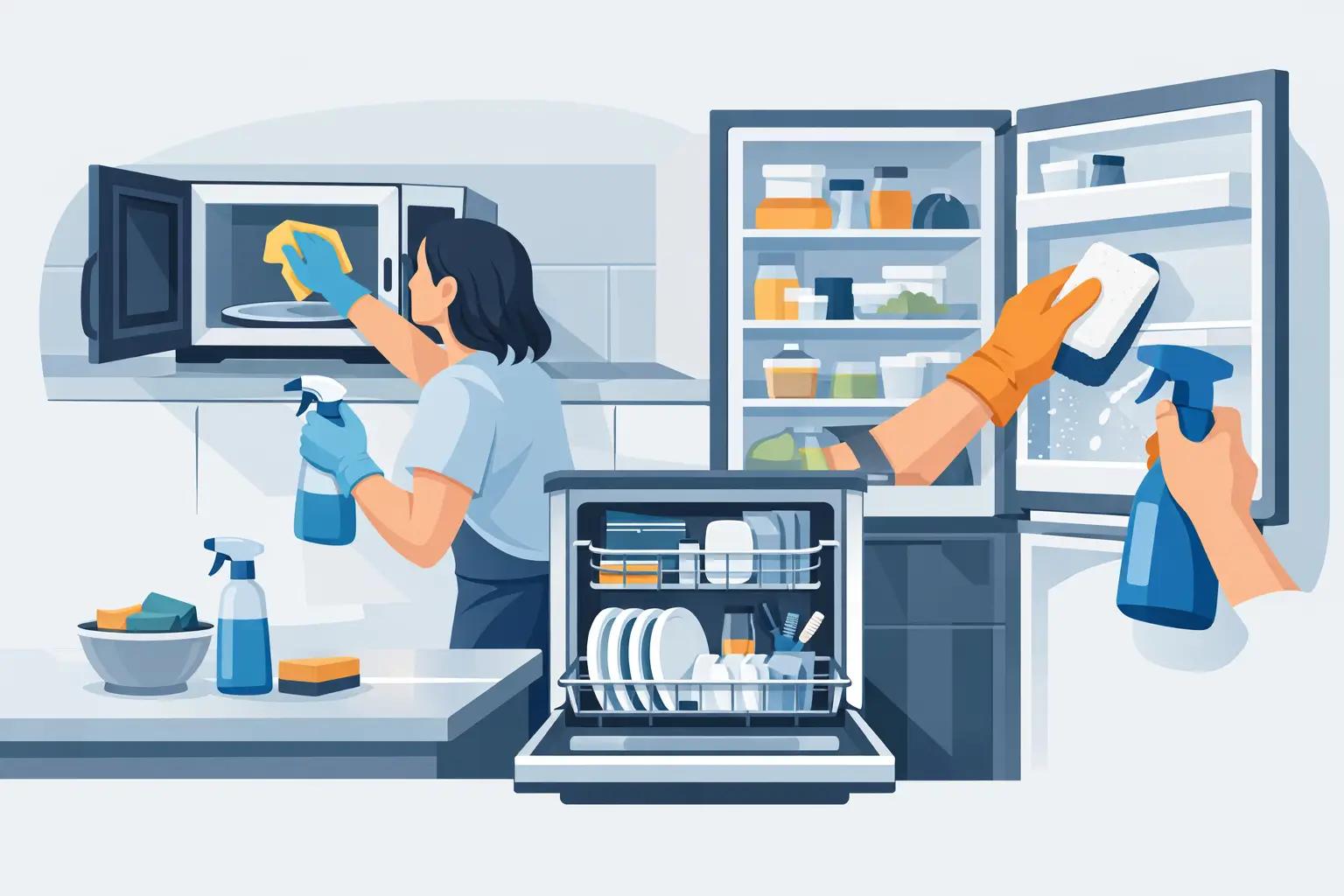
The kitchen often becomes the household’s recovery station, with tea mugs, medicine cups, soup bowls, and tissues appearing on every counter. Clear the clutter first. Wash dishes, wipe counters, clean the sink, and disinfect frequently handled appliance controls and refrigerator handles.
Dispose of old tissues, opened cough-drop wrappers, and any food that has been left out too long. If the sick person prepared food while symptomatic, a more thorough kitchen cleaning is sensible. If they simply rested while someone else cooked, focus on their own touchpoints rather than treating every pantry shelf as contaminated.
Replace the kitchen sponge if it is worn, odorous, or was used for extensive cleanup. A fresh dishcloth and an empty, wiped-down sink help the whole space feel reset quickly.
Don’t Forget Airflow and Everyday Habits
Surface cleaning is helpful, but a comfortable post-illness home also depends on ventilation and routine. Open windows when weather allows, run bathroom exhaust fans, and replace HVAC filters on their normal schedule. If your home uses a portable air purifier, clean or replace its filter as directed by the manufacturer.
For the next few days, encourage frequent handwashing and keep a hand soap dispenser stocked near the kitchen and bathroom sinks. It is reasonable to wipe down high-touch areas once a day while someone is still recovering. After that, regular cleaning is usually enough unless a health care provider has given your household specific guidance.
When a Deep Cleaning Is Worth Scheduling
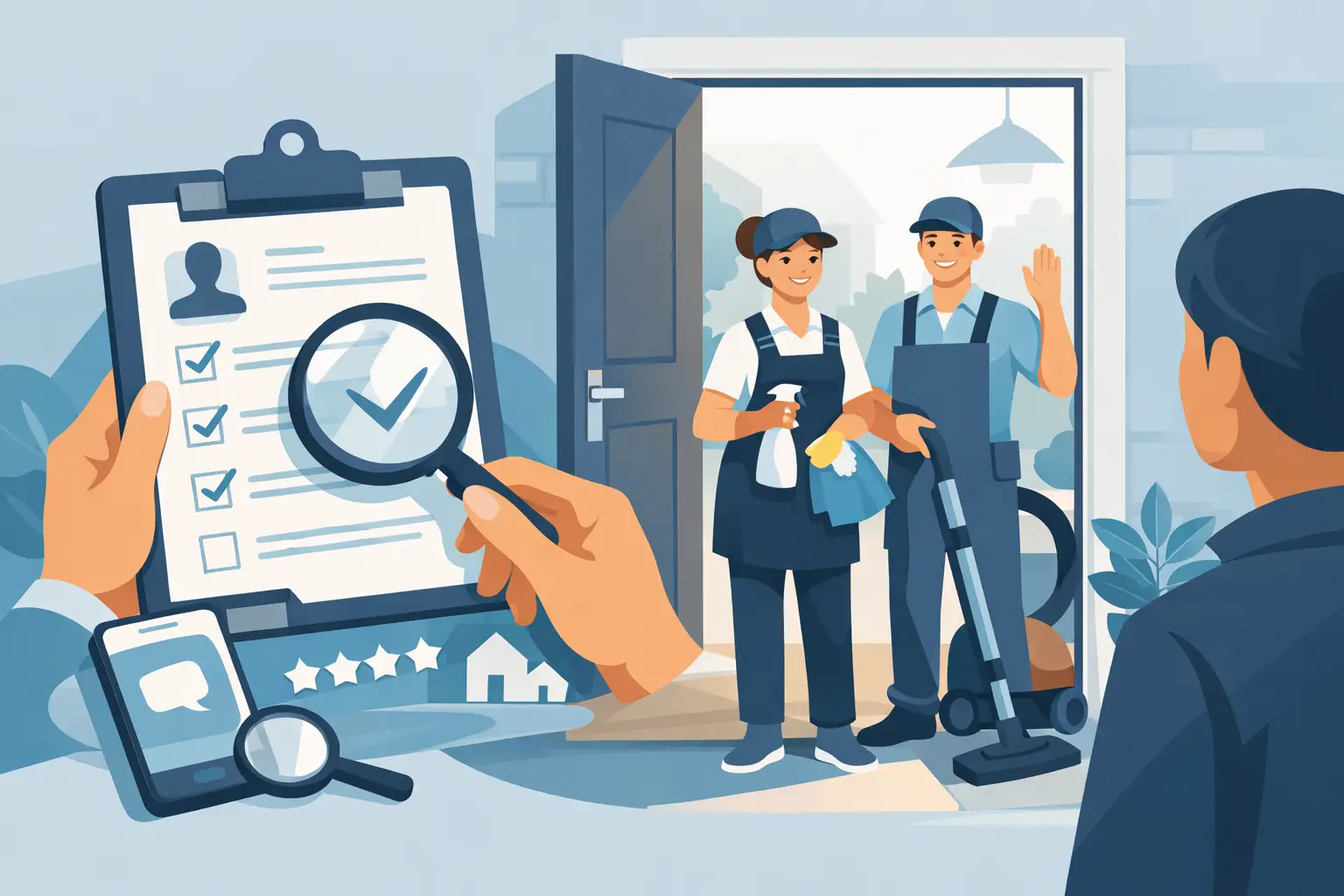
Sometimes the challenge is not knowing what to clean. It is having the energy to do it after caring for a sick child, partner, parent, or yourself. A professional deep cleaning can be especially helpful after a prolonged illness, when multiple people in the household were sick, or when bathrooms, floors, bedding areas, and kitchen surfaces all need attention at once.
A detailed service can take care of the overlooked work: baseboards, fixture exteriors, cabinet fronts, appliance surfaces, floors, and the high-touch areas that make a house feel truly refreshed. For families and busy professionals in Deerfield Beach and nearby communities, Go Cleaning Maids can tailor a deep-cleaning visit to the areas that need the most support, using eco-friendly, pet-safe products and a clear service scope.
Be sure to tell any cleaning team about the type of cleanup needed ahead of time. If there are active symptoms, bodily fluid cleanup, or a contagious illness still present in the home, the team can advise on safe timing and whether special precautions are needed.
The best post-illness reset is the one that lets your household breathe easier without exhausting the person who has already done the caregiving. Start with the rooms and touchpoints that matter most, use products correctly, and let the rest wait until everyone is feeling like themselves again.